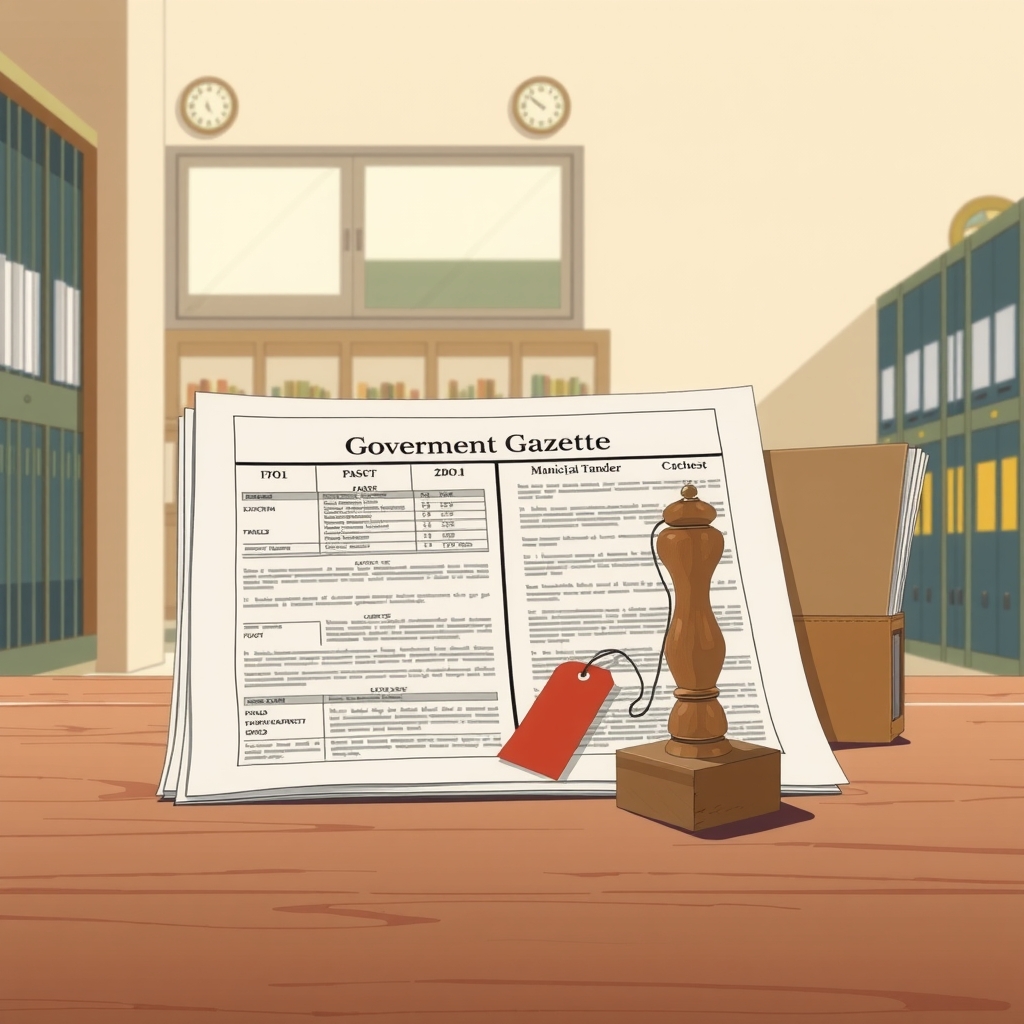
Evidentiary Risks and Verification Principles for Civic Reporting
When examining public expenditure, municipal tenders, or corporate contracts, relying on unvetted digital files or leaked paperwork carries severe credibility risks. Public critique often notes that citizen reporting can be subjective because it operates outside institutional newsroom frameworks, as documented on Wikipedia [2]. Without established editorial desks or institutional legal backing, publishing an unverified document as factual evidence damages investigative credibility and misleads the public. Responsible reporting demands evidence-based analysis rather than uncorroborated assertions, an editorial principle emphasized by Ellen Ruppel Shell of Boston University in reporting published by the Granite State News Collaborative [1]. To maintain investigative standards, writers must apply an editorial rule: any finding or assertion that could reasonably be disputed must be attributed directly to its verifiable primary source. Establishing a public-record document verification checklist for citizen journalists replaces guesswork with an objective pass-or-fail filter before publication.
| Verification Dimension | Pass Condition | Fail Condition |
|---|---|---|
| Record Identifier | Document reference or tender ID matches the official government portal | Identifier is missing, altered, or absent from public registries |
| Issuing Authority | Signatory designation corresponds to a gazetted administrative office | Signatory lacks official jurisdiction or authority is unspecified |
| Custody Trail | File is retrieved directly from a certified repository or statutory disclosure | File originates from an untraceable intermediary with broken provenance |
An illustrative scenario demonstrates how to apply each pass or fail step to a representative public document. Suppose an anonymous PDF arrives via social messaging, alleging that a municipal ward diverted road maintenance funds to an unlisted contractor. Applying the verification checklist reveals how each checkpoint functions:
- Identifier check: Searching the reference code on the state e-procurement registry confirms whether a matching tender docket exists. If the ID is absent, the document fails.
- Authority check: Comparing the signatory name and title against the official municipal gazette establishes administrative standing. An unverified title or non-existent post triggers a fail.
- Custody check: Because the file arrived from an untraceable digital forward rather than a certified government portal or documented Right to Information dispatch, it fails provenance authentication.
When a document fails any verification dimension, civic researchers must halt publication and trace the record back to an authentic public custodian.
Issuing Authority and Repository Provenance Verification
Every authentic civic record originates from a specific statutory custodian. Before citing any order, allotment, or disclosure, you must establish the exact public authority or registry empowered to issue that paperwork. Unverified PDF files, forwarded screenshots, and document scans shared across chat groups frequently strip away provenance or circulate doctored excerpts. Accepting such circulating files without locating the entry in an official docket exposes your reporting to severe fabrication risks.
To determine provenance, examine the administrative markers on the face of the document. Genuine government and regulatory papers display formal identifiers:
- Statutory issuer: The full official designation of the department, ministry, or corporate registry branch.
- File reference numbers: Check administrative docket codes, circular references, or gazette identifiers against the department's official filing registry.
- Publication and dispatch marks: Date stamps, outward dispatch numbers, official seals, or digital signature validation panels.
Reporting published by the Granite State News Collaborative [1] emphasizes that responsible journalists go directly to original files to verify information whenever possible. They return to public records to confirm concrete facts such as laws, ordinances, and public spending.
Consider an illustrative verification scenario involving a purported Right to Information reply circulating on messaging channels. The file claims that a state welfare agency routed discretionary grants to an unlisted entity. A researcher checks the header for the designated public information officer title, file reference coding, and outward dispatch number. Next, the researcher checks the agency RTI tracking portal or inspects the physical dispatch register maintained by that public authority. If the file reference number does not match an official registry entry, or if the outward register shows no record of that dispatch, the document fails authentication. Independent reporters must never publish claims based on detached digital files until the record is corroborated directly inside the custodian docket.
The Public-Record Document Verification Checklist Matrix
Objective document verification turns suspicious claims into concrete evidentiary tests before publication. Independent investigators inspecting corporate disclosures, land allotments, or public tenders need uniform rules to separate authenticated records from uncorroborated paperwork. When evaluating complex materials, verification must extend beyond isolated figures. Reporting published by the Granite State News Collaborative [1] highlights an editor's fact-checking checklist from the Knight Science Journalism Program at the Massachusetts Institute of Technology. This checklist instructs editors to ask whether reporting provides appropriate context and caveats, and whether it acknowledges real or perceived conflicts of interest.
Applying these standards requires structured pass and fail thresholds across every inspection stage:
| Verification Check | Pass Condition | Evidence to Request | Action on Failure |
|---|---|---|---|
| Provenance Confirmation | File originated from an authenticated statutory body or official regulatory docket | Certified filing copy, gazette notice, or verified inward dispatch number | Withhold publication and trace the paper trail back to the originating agency |
| Document Integrity | Typography, page numbering, reference codes, and seals show no signs of manipulation or erasure | Original scan, uncompressed digital document, or direct registry download | Halt reporting on suspect segments and isolate pages for comparative analysis |
| Custodian Corroboration | Record details match active repository indexes and public docket records | Official portal search extract, docket listing, or public officer confirmation | Submit a targeted public records request to confirm administrative validity |
| Audit Logging | Every retrieval date, download source, and unedited master file is documented in a verification log | Dated file hash, archive download stamp, and custodian correspondence records | Quarantine unlogged files until chain of custody is established |
| Context and Conflict Review | Narrative accounts for administrative caveats and identifies commercial or political interests | Supplementary circulars, conflict disclosures, and related registry filings | Add explicit scope limits to draft findings or discard one-sided assertions |
Applying Verification Criteria to Corporate Records
Consider an illustrative situation where a circulating document alleges that a local infrastructure vendor concealed shared leadership with an elected official. A researcher inspects the corporate registry return to corroborate the claim. If the director identification numbers and allotment dates in the circulating page match the official corporate database and statutory filings, the document passes provenance and integrity checks. If the registry reveals conflicting director identifiers or shows that the leaked page altered the filing period, the item fails. Rather than publishing an uncorroborated leak, the researcher withholds the claim, logs the discrepancy, and submits a formal inspection request to obtain certified repository extracts.
Cross-Verification via Public Registries and Information Requests
Validating paperwork against open state databases provides an objective test before publishing investigative findings. Even when an unverified record looks authentic, independent public archives must confirm that the underlying administrative action occurred.
Official information requests serve as a direct verification mechanism, but broad inquiries rarely succeed. As reporting published by the ICIJ [3] observed in a 2013 global guide on public records, access statutes do not require public authorities to search out needles in a haystack. Overly broad or vague submissions are routinely ignored or denied. The same reporting noted that while access laws exist across dozens of jurisdictions, real-world implementation frequently stumbles because compliance desks face understaffing, requests get ignored, and records go missing.
To overcome administrative resistance, information requests must target concrete identifiers rather than open-ended explanations. Asking for all correspondence regarding a development project invites rejection or endless delays. Demanding a numbered sanction order, a specific outward dispatch reference, or a designated tender approval memo leaves the public authority with a straightforward file retrieval task.
Cross-Referencing Independent Public Portals
Cross-referencing requires corroborating three core markers across independent digital portals: the administrative reference or contract number, the execution date, and the recorded legal entities. Relying on a single registry creates blind spots, especially if an agency portal suffers from delayed synchronization or redaction.
Suppose a circulating document outlines a municipal civil works contract awarded to a private supplier. Cross-verifying the file follows a systematic comparison across distinct public repositories:
| Verification Stage | Primary Registry Check | Corroborating Source | Decision Threshold |
|---|---|---|---|
| Reference Number | Public e-procurement portal notice | Departmental sanction ledger | Pass if the exact tender reference matches both records |
| Chronology | Contract award date on portal | Treasury disbursement log | Pass if the payment voucher postdates the formal award date |
| Corporate Identity | Ministry of Corporate Affairs filing | State commercial tax registry | Pass if company registration numbers and active status align |
When the e-procurement portal lists the tender as cancelled, or the corporate database indicates the firm was incorporated months after the contract date, the circulating document fails cross-verification. Investigating discrepancies across official records isolates administrative clerical errors from deliberate misrepresentation without assuming what unverified leaks claim.
Chain of Custody, Provenance Logging, and Editorial Sign-Off
Every investigative report requires an auditable record of how each document was obtained, inspected, and confirmed. A provenance log tracks the exact custodian, file format, retrieval date, and administrative docket number before any line of text enters a draft. If an official record cannot be tied back to an unbroken chain of receipt, it cannot serve as factual evidence.
Maintaining this custody log protects public trust. Readers can see the documentation trail, while reporters shield their work against accusations of circulating fabricated files.
A rigorous editorial sign-off separates verified records from surrounding accusations:
| Verification Component | Review Standard | Editorial Action |
|---|---|---|
| Official Public Record | Confirmed against government registry or outward dispatch ledger | Publish factual administrative findings |
| Leaked Annotation | Lacks custodian corroboration or official file stamping | Attribute solely as an unverified document marking |
| Verbal Tip or Allegation | Lacks independent paper trail | Withhold from factual reporting until documented |
Consider an illustrative scenario where you obtain an authenticated municipal expenditure sheet accompanied by handwritten notes alleging political kickbacks. The sign-off protocol allows you to report the verified financial disbursements directly from the official register. You exclude the handwritten notes and spoken allegations from the factual report because unverified notes fail the evidentiary threshold. Verification ends where documentation stops.